Wondering what happens at a dental checkup? This step-by-step walkthrough covers check-in, the exam, cleaning, polishing, and the discussion with your dentist.
A typical dental checkup follows a predictable sequence: check-in and history update, a visual and hands-on exam of your teeth and gums, a professional cleaning to remove plaque and tartar, polishing, and a final discussion with the dentist about findings and next steps. Offices vary in order and detail, but this is the general shape of a routine visit.
Knowing the sequence matters because uncertainty is the main reason many people postpone appointments. A checkup is a preventive visit, not a treatment session. In most cases nothing will be done to your teeth that you have not agreed to. The appointment is primarily about information gathering: the dental team looks at the current state of your mouth, cleans what home care cannot, and talks with you about what they found. Understanding each step in advance turns an opaque medical visit into a manageable routine errand.
Step 1: Arrival and Check-In
The visit starts before you sit in the dental chair. Arriving a little early gives you time to handle the administrative part of the appointment without feeling rushed.
#### Updating Your Information
At the front desk you will typically confirm your personal details and contact information. If it is your first visit to a particular office, you will fill out a longer registration form. Returning patients usually just confirm that nothing has changed since the last visit.
One part of check-in that deserves care is the health history section. Dental offices ask about your general health, current medications, allergies, and conditions such as diabetes or heart problems, because these can affect dental care. Update this information honestly every time you visit. A medication you started taking three months ago can influence decisions the dentist makes, so mention it even if it seems unrelated to your teeth.
If you have dental insurance, bring your insurance card or your member details. Offices usually verify coverage before or during the appointment. If you are a new patient, you may also be asked to show photo identification.
#### What to Bring
For a routine checkup, a short list covers almost everything: your insurance information, a list of current medications and supplements, and a list of questions or concerns you want to raise. Writing your questions down in advance is worth doing, because it is easy to forget them once the appointment gets going.
Step 2: Getting Settled in the Chair
After check-in, a dental assistant or hygienist will usually bring you to the treatment area and invite you to sit in the dental chair. They may offer you a protective bib, which keeps your clothing clean during the cleaning. Many offices dim the overhead light and let you adjust the chair position for comfort.
This is also when the assistant typically confirms the purpose of your visit and asks whether you have noticed anything new since your last appointment — pain, sensitivity, a chipped tooth, or concerns about your gums. Be specific. "My upper right molar aches when I drink something cold" is more useful than "my teeth hurt sometimes." Specific descriptions help the dental team focus the exam on the right area.
If you feel nervous about dental visits, this early part of the appointment is a good moment to say so. Dental teams see anxious patients regularly and can adjust their approach — explaining each step before they do it, checking in with you during the cleaning, or agreeing on a signal you can use if you want them to pause.
Step 3: The Oral Examination
Dental Checkup: What Happens Step by Step
The examination is the diagnostic core of the checkup. It usually has several layers, and the dentist or hygienist will narrate at least part of it as they go.
#### Visual Inspection
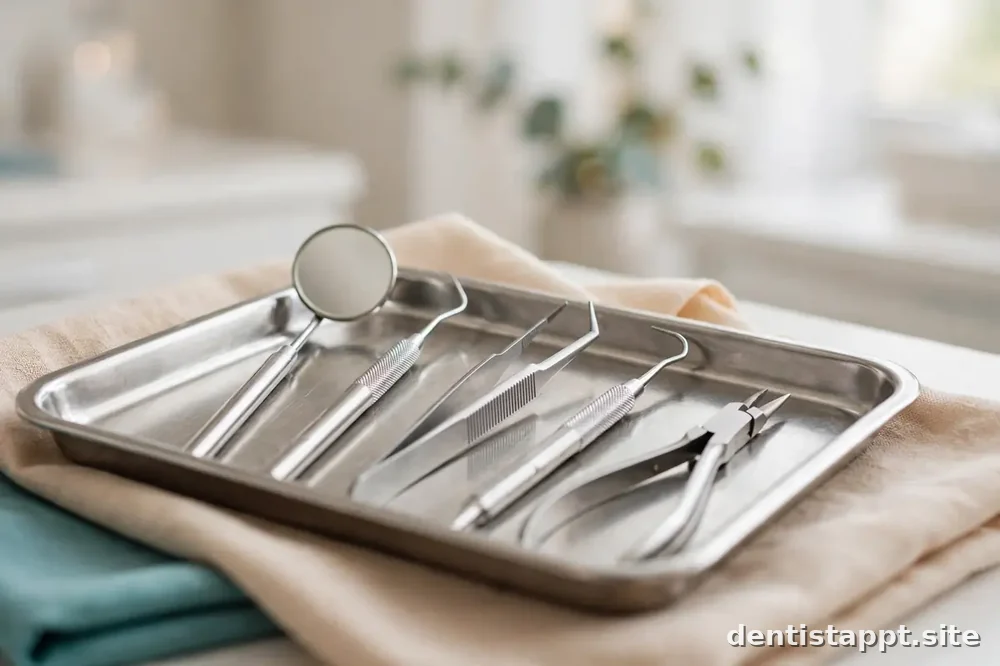
Using a small mirror and a bright light, the dental professional looks at every accessible surface of your teeth, checking for visible cavities, worn or cracked teeth, and the condition of any existing fillings, crowns, or other dental work. They also look at your tongue, the inside of your cheeks, the roof and floor of your mouth, and your gums.
Gum evaluation is an important part of this stage. Healthy gums typically look firm and pale pink and do not bleed easily. Redness, swelling, or bleeding can indicate gum inflammation, and the examiner will note where it occurs.
#### Gum Pocket Measurement
For many patients, the exam includes periodontal probing: the hygienist or dentist gently places a thin instrument beside each tooth to measure the depth of the pocket between the tooth and the gum. They may call out numbers while an assistant records them. This measurement helps track gum health over time, since changes in pocket depth are one of the signals dental professionals use to monitor gum condition. You can learn more about how often these visits are recommended in our article on how often you should see a dentist.
Step 4: X-Rays, If Needed
Not every checkup includes X-rays. Dentists request them based on your history, your risk factors, and how long it has been since the last set. New patients are more likely to get X-rays at a first visit because the office has no baseline images yet.
If X-rays are taken, the process is quick: a small sensor or film is placed inside your mouth while you hold still for a few seconds per image. The images let the dentist see between teeth and below the gumline — areas that cannot be examined visually, such as developing cavities between teeth or the condition of tooth roots and supporting bone. For a full explanation of the common types and their purposes, see our guide to dental X-rays explained. If you are visiting a dentist for the first time, our walkthrough of a first dental visit covers what to expect when the office has no records on you yet.
Step 5: Professional Cleaning
Dental Checkup: What Happens Step by Step
The cleaning, sometimes called scaling, is the part of the checkup most patients notice. Even thorough brushing and flossing leave behind plaque that hardens into tartar, which cannot be removed at home. Removing it is the main job of this stage.
#### Scaling
Using hand instruments or an ultrasonic device, the hygienist removes plaque and tartar from the tooth surfaces and along and slightly below the gumline. The ultrasonic tool uses vibration and a fine water spray; it produces a buzzing sound and a sensation of water in your mouth, with suction handling most of it. Hand instruments make a light scraping sound. Neither should cause pain, though sensitive areas can feel uncomfortable — tell the hygienist if something hurts, because they can adjust pressure or technique.
#### Polishing
After scaling, the hygienist usually polishes your teeth with a mildly abrasive paste applied with a small rotating rubber cup or brush. Polishing removes surface stains and leaves the teeth feeling smooth. A smooth surface also makes it slightly harder for new plaque to stick in the days immediately afterward.
#### Flossing and Rinse
The hygienist typically flosses between your teeth to clear any remaining debris, then has you rinse. Your mouth should feel noticeably cleaner at this point — that fresh, smooth feeling is the immediate payoff of the appointment.
Step 6: The Discussion With the Dentist
After the exam and cleaning, the dentist reviews the findings with you. This conversation is one of the most valuable parts of the visit, and it is worth engaging with rather than treating it as a formality.
#### What the Dentist May Tell You
Expect a summary of what was found: areas that look healthy, any cavities or cracks spotted, the state of your gums, and how your existing dental work is holding up. If nothing needs attention, the dentist will say so and recommend when to come back. If something does need attention, they will explain what it is, how urgent it is, and what the options are.
#### Questions Worth Asking
This is the moment to raise the concerns you wrote down before the visit. Useful questions include: Is there anything about my brushing or flossing technique I should change? Are there areas I am missing? Do any of my medications affect my oral health? And if treatment was suggested: What happens if I wait? What are the alternatives? Taking notes, or asking whether you can, helps you remember the answers later.
#### Treatment Planning
If the dentist recommends treatment — a filling, a crown, a referral to a specialist — you are not obligated to agree on the spot. It is entirely reasonable to ask for a written treatment plan with the proposed steps, and to take time to consider it, ask about timing, or seek a second opinion for major work. A checkup is an information visit; decisions about treatment can usually be made afterward at your own pace.
Step 7: Scheduling the Next Visit
Before you leave, the front desk will usually offer to schedule your next checkup. Many offices book the next routine visit six or twelve months out, depending on what the dentist recommended. Booking before you leave is the simplest way to keep the routine going, since the appointment is then in your calendar rather than a vague intention.
You will also receive any paperwork from the visit: a summary of findings, a treatment plan if one was created, and receipts or insurance claim information. If referrals were made, the office will typically send your records or X-rays to the referred practice.
How Long a Checkup Takes and How It Feels
A routine checkup for an established patient commonly takes between thirty minutes and an hour, including check-in. First visits run longer because of the extra paperwork and comprehensive exam. Most of the appointment is uneventful; the cleaning produces the most sensation — vibration, water, scraping sounds — but is not generally painful. Gums may feel slightly tender for a day if there was significant tartar buildup.
Offices differ in sequence and style: some dentists examine before the cleaning, others after. The steps above describe typical components, not a rigid order, so minor differences are normal and not a cause for concern.
FAQs
How often should I get a dental checkup?
There is no single schedule that fits everyone. Many people are advised to come in every six months, while others with ongoing gum issues or a history of frequent cavities may be asked to return more often, and people with consistently healthy mouths may be fine with longer intervals. The right frequency depends on your oral health history, risk factors, and what your dentist observes at your visits. Rather than assuming a fixed schedule, ask your dentist at your next checkup what interval they recommend for you specifically, and see our article on how often you should see a dentist for a fuller discussion.
Will a dental checkup hurt?
For most people, a routine checkup involves little to no pain. The exam itself is gentle, and the cleaning may cause brief discomfort in sensitive spots but is not generally painful. If you have significant tartar buildup or inflamed gums, the cleaning can feel more intense, but the hygienist can adjust their approach if you speak up. Dental teams are accustomed to nervous patients, so tell them in advance if you are anxious — they can explain each step as they go and agree on a stop signal with you.
Do I need X-rays at every checkup?
No. Dentists decide whether X-rays are needed based on your individual situation — your history, symptoms, risk factors, and how long it has been since your last images. Some patients need them frequently because of ongoing issues; others can go longer between sets. If X-rays are suggested and you have questions about why they are needed or how often you will need them, ask the dentist to explain the reasoning. Our guide to dental X-rays explained describes the common types and what each one is used for.
What is the difference between a checkup and a cleaning?
The terms are often used loosely, but they refer to different things. The checkup, or examination, is the diagnostic part: the dentist assesses your teeth, gums, and mouth and discusses findings with you. The cleaning, or scaling, is the preventive treatment part: removing plaque and tartar that home care cannot. Most routine appointments include both, which is why people use the words interchangeably. A standalone cleaning appointment without an exam is less common but exists in some practices.
What should I do if the dentist recommends treatment I was not expecting?
Take the information home and think it over. Ask for the findings and the proposed treatment in writing, including what each step involves and how urgent it is. You can ask what happens if you wait, whether there are alternative approaches, and whether a second opinion makes sense for extensive work. Unexpected recommendations are not emergencies in most cases, and a reputable dentist will be comfortable with you taking time to decide. Discuss any questions with a qualified dental professional before committing to treatment.
This site is educational information only — not medical advice. Consult a qualified dental professional about your own situation.