The holiday season challenges oral health on three fronts at once: more sweets and sugary drinks than usual, travel that disrupts daily routines, and packed calendars that push dental care to "after the holidays." None of these requires giving up the season's pleasures — but each benefits from a little planning.
With small adjustments to how you handle sugar, a simple travel kit, and smart scheduling, your teeth can come through December in good shape.
Sweets: Enjoy Them Strategically
Holiday treats are not going away, and they do not need to. The goal is moderation with strategy, because how and when you eat sugar matters as much as how much.
Frequency beats quantity. Every sugary snack triggers an acid attack on enamel that lasts roughly twenty to thirty minutes. Grazing on sweets all afternoon means your teeth spend hours under acid exposure; eating the same amount in one sitting means a single, shorter exposure. If you are going to indulge, consolidating treats into or right after meals is kinder to teeth than constant nibbling.
The worst offenders share traits. Sticky candies that cling to teeth, hard candies that bathe teeth in sugar for a long time, and sour candies that combine sugar with acid are the hardest on enamel. Chocolate, by comparison, clears from the mouth relatively quickly. You do not need a banned list — just awareness that not all treats are equal.
Pair sweets with meals and water. Eating dessert right after a meal takes advantage of increased saliva flow, which helps neutralize acids and wash away food particles. Drinking water after sweets — rather than another sugary drink — further reduces the sugar's contact time with teeth.
Do not brush immediately after acidic treats. It sounds counterintuitive, but brushing right after acidic foods or drinks can wear softened enamel. Wait about thirty minutes, rinse with water first, and then brush normally.
Watch the drinks. Holiday punches, sweetened coffees, sodas, and alcohol all contribute sugar or acid. Alternating with water, using a straw for acidic drinks when practical, and not sipping sugary beverages for hours are simple mitigations.
The Holiday Travel Dental Kit
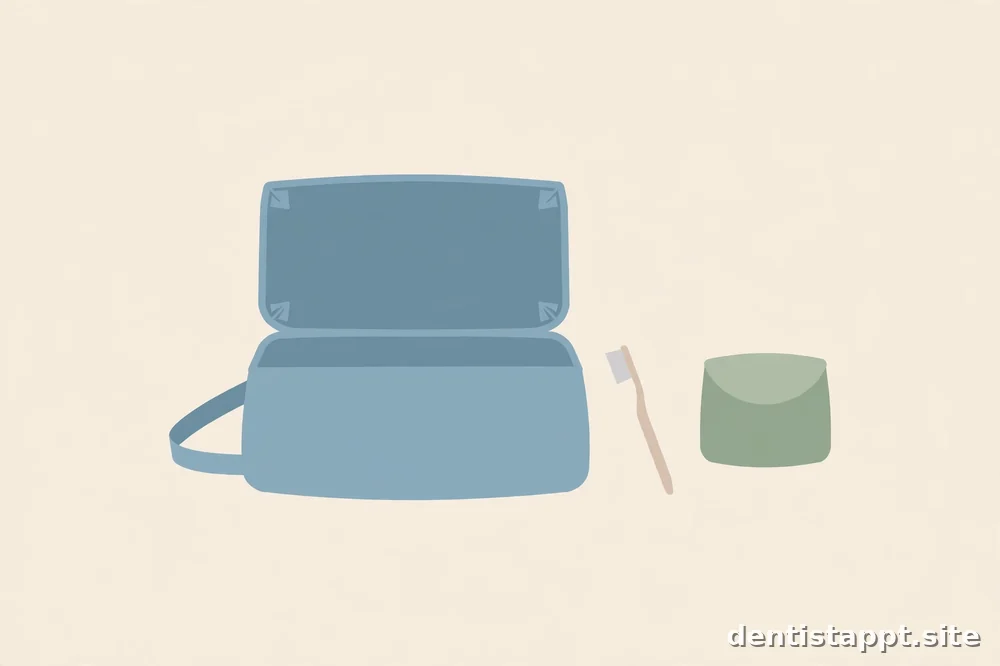
Travel dismantles routines: unfamiliar bathrooms, red-eye flights, long drives, and hotel stays where the toothbrush ends up buried in luggage. A dedicated travel kit removes the excuses. Pack it before the season starts so it is always ready:
- A toothbrush in a ventilated case (sealed wet cases breed bacteria; let it air-dry when you arrive)
- Travel-size fluoride toothpaste
- Floss or interdental picks — the single most commonly forgotten item
- A small bottle of water for rinsing on long travel days
- Any appliance you use: night guard, retainer, or aligners, plus its case
- Sugar-free gum with xylitol for times when brushing is impossible — chewing stimulates saliva, which is the mouth's natural defense
Keep the kit in your carry-on or personal bag, not checked luggage. And build one for each traveling family member rather than assuming sharing will work out — it rarely does.
For the broader seasonal routine this kit supports, our fall oral health routine checklist covers the habits worth resetting before the holidays arrive.
Scheduling Dental Care Around the Holidays

December is the hardest month of the year to get a dental appointment — offices are booked with year-end benefit patients and holiday-shortened weeks. Planning around this reality beats fighting it.
Book checkups in the fall. If you are due for a checkup, September or October appointments offer better availability and leave time for any follow-up treatment. Unsure about your ideal interval? Our guide on how often you should see a dentist explains the general recommendations.
Do not start multi-visit treatment in mid-December. Crowns and similar treatments span weeks; beginning one just before holiday travel risks leaving you with a temporary restoration over the celebrations. Start earlier or wait until January.
Handle the "suspicious tooth" now. That twinge you have been ignoring since October will not improve over the holidays — and holiday dental emergencies are miserable. If something feels off, book before the season peaks. Our walkthrough of how to book a dentist appointment makes the scheduling step painless.
Know your emergency options. Before traveling, note how to reach your dentist's office and what the after-hours protocol is. If you are traveling far, identify an urgent dental clinic near your destination — a two-minute search now beats a panicked search with a toothache later.
Protecting Kids' Teeth Through the Season
Children face the heaviest holiday sugar exposure and the weakest impulse control — a combination that makes December a peak season for new cavities. Practical defenses:
- Keep the morning and evening brushing routine non-negotiable, even on exciting days. Holiday mornings are chaotic; brushing should be as automatic as getting dressed.
- Apply the same consolidation principle: treats with or after meals, not constant grazing from a candy bowl.
- Supervise younger children's brushing — excitement does not improve technique.
- If your child plays winter sports, a mouthguard remains essential; holiday tournaments are not the time to skip it.
Alcohol, Late Nights, and Grinding
Holiday stress and disrupted sleep increase teeth grinding and clenching for many people. Alcohol, common at celebrations, dries the mouth — and saliva is a key defense against decay, so a dry mouth overnight is a meaningful risk factor. If you use a night guard, the holidays are the worst time to leave it at home. If you wake with jaw soreness or headaches, mention it at your next dental visit rather than dismissing it as seasonal stress.
Late nights also erode the bedtime brushing habit. The rule from our fall reset applies doubly in December: on exhausting nights, the goal is "brush at all." A quick brush beats a skipped one, and the streak matters more than any single session. If you do not have a night guard but suspect grinding — morning jaw soreness, flattened tooth edges, or a partner who hears it — the holidays are a reasonable prompt to raise it at your next checkup.
The Morning-After Routine
After a heavy holiday evening — sweets, drinks, late night — the next morning deserves a reset, not guilt. Brush thoroughly for two minutes, clean between the teeth, drink water, and eat a normal balanced breakfast. If travel kept you from flossing for a few days, resume without guilt — gums rebound quickly once the routine returns, though persistent bleeding deserves a mention at your next visit. One indulgent evening does not undo months of good habits; what matters is returning to the routine immediately rather than letting one late night become a week of skipped brushing.
Entering the New Year in Good Shape
The holidays end, and January brings its own opportunity: a fresh start for any dental work you postponed. If December was too packed for a checkup, book it for early January. Review what the season taught you — which habits held, which slipped — and adjust. Oral health is a year-round practice; the holidays are simply its annual stress test, and passing it is mostly a matter of planning rather than willpower.
How can I enjoy holiday sweets without harming my teeth?
Consolidate sweets into mealtimes rather than grazing all day, since each sugary snack triggers an acid attack lasting twenty to thirty minutes. Drink water afterward, avoid sticky and sour candies when you have a choice, and wait about thirty minutes before brushing after acidic treats. Chewy, sticky treats deserve extra attention — rinse or brush after them when you can. Remember that the pattern matters more than any single dessert: consistent moderation across the season protects teeth far better than one perfect day followed by a week of grazing.
What should I pack in a travel dental kit?
A toothbrush in a ventilated case, travel-size fluoride toothpaste, floss or interdental picks, water for rinsing, and any appliance you use — night guard, retainer, or aligners — plus its case. Sugar-free gum is useful when brushing is impossible. Keep the kit in your carry-on, build one per traveler, and pack it before the season so it is always ready to grab.
Should I brush right after eating holiday sweets?
Rinse with water first and wait about thirty minutes before brushing, especially after acidic treats or drinks. Acid temporarily softens enamel, and immediate brushing can wear the softened surface. For sugary-but-not-acidic foods, prompt brushing is fine. During treat-heavy weeks, the rinse-and-wait rule is the safer general habit — and a fluoride toothpaste at bedtime gives enamel its best overnight defense.
What should I do about a toothache during the holidays?
Do not wait for January. Call your dental office promptly — describe the symptoms clearly so they can triage urgency. For travel, identify an urgent dental clinic near your destination in advance. If swelling, fever, or trauma is involved, treat it as urgent and seek care the same day. Save your dentist's after-hours number in your phone before traveling, so you are not searching for it while in pain. Over-the-counter pain relief can help short-term, but persistent pain always warrants professional attention regardless of the calendar.
Is it too late to see a dentist in December?
Not necessarily, but availability is tight — December is typically the busiest month as patients use remaining benefits. Book as early as possible, consider early-morning or mid-week slots, and ask about cancellation lists. For non-urgent care, early January is perfectly fine; for anything painful or suspicious, call now rather than waiting. And if December truly will not work, book the January appointment now while you are thinking about it instead of letting it slide indefinitely.
This site is educational information only — not medical advice. Consult a qualified dental professional about your own situation.