A dental filling repairs a tooth damaged by decay: the dentist removes the decayed portion and fills the space with a restorative material, rebuilding the tooth's shape and function. The appointment is usually straightforward — most fillings are completed in a single visit with local anesthesia, and patients typically resume normal activities the same day.
What a filling actually does
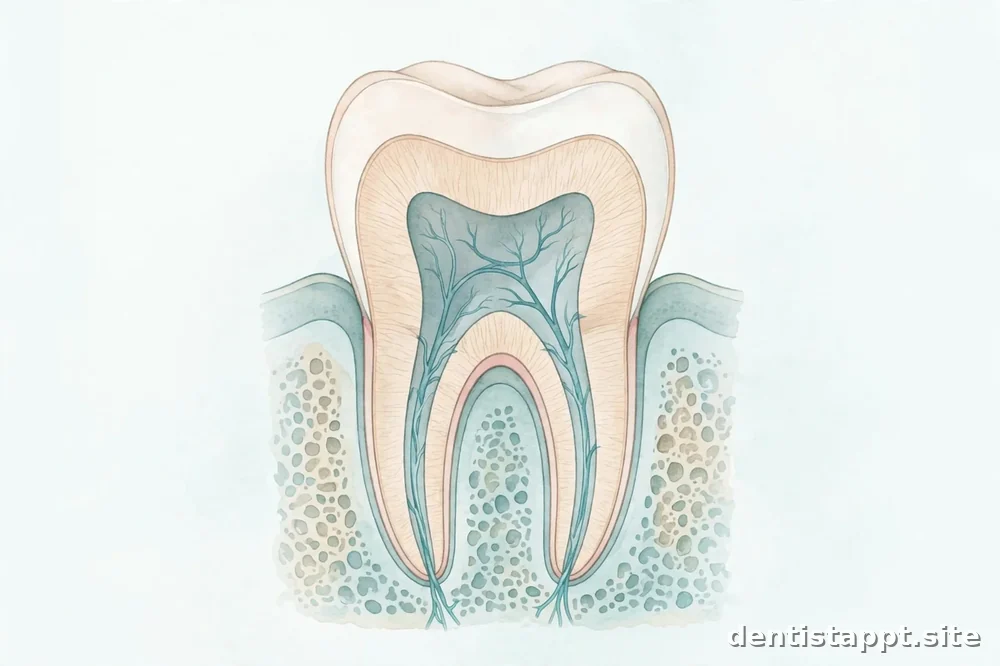
To understand fillings, it helps to know a little about tooth anatomy. A tooth has layers: the hard outer enamel, the softer dentin beneath it, and the inner pulp containing nerves and blood vessels. You can read more about these layers in our guide to the parts of a tooth. When decay (a cavity) eats through the enamel and into the dentin, the damaged structure cannot heal on its own — the decayed material must be removed and the space sealed.
That is what a filling does. It serves three purposes at once: it removes the source of ongoing decay, it seals the tooth against bacteria so the decay cannot continue underneath, and it restores the tooth's shape so you can bite and chew normally. Without this repair, decay typically keeps progressing inward, and what starts as a simple filling can eventually require more extensive treatment such as a root canal or even extraction.
When fillings are used
Fillings are used whenever a tooth has localized damage that is too extensive for preventive measures but not so extensive that the tooth needs a crown or other major restoration. The most common reason is tooth decay — cavities found during a routine dental checkup or because of symptoms like sensitivity to sweet, hot, or cold foods.
Fillings can also repair teeth that are chipped, cracked, or worn down, provided the damage is limited. Dentists sometimes use filling materials for cosmetic reshaping as well, such as closing small gaps or evening out minor irregularities. The key factor is how much healthy tooth structure remains: a filling works by bonding to or packing into the existing tooth, so there needs to be enough sound tooth left to support it.
The main filling materials, at a concept level
Several materials are used for fillings, and they differ in appearance, properties, and typical applications. No material is universally best — dentists consider the location of the tooth, the size of the cavity, bite forces, aesthetics, and patient factors when discussing options. Here is what each type is, in general terms.
#### Composite resin (tooth-colored fillings)
Composite is a mixture of plastic resin and fine glass particles that is shaded to match the natural color of your teeth. It is bonded directly to the tooth structure, which means the dentist can often preserve more of the healthy tooth than with some other materials. Because it blends in visually, composite is the most common choice for visible front teeth and is widely used on back teeth as well. The material is placed in layers and hardened with a special curing light during the appointment.
#### Amalgam (silver-colored fillings)
Dental amalgam is a mixture of metals that has been used for well over a century. It is known for durability and has historically been used for back teeth where chewing forces are greatest. Amalgam fillings are silver-gray in color, so they are noticeable — which is one reason their use has declined as tooth-colored alternatives have improved. Placement is a well-established, relatively quick process. Some patients ask about the mercury content in amalgam; this is a reasonable question to discuss directly with your dentist, who can explain the current professional guidance.
#### Glass ionomer
Glass ionomer is a tooth-colored material made from acrylic and a glass component that releases fluoride over time. That fluoride release is its distinguishing feature — it can help protect the surrounding tooth structure. Glass ionomer is generally not as strong as composite or amalgam, so it tends to be used in specific situations: fillings in areas under less chewing stress, fillings below the gum line, or temporary and pediatric applications. Your dentist can explain when this material is appropriate.
#### Gold and ceramic (indirect restorations)
For larger cavities, some restorations are made outside the mouth — either in a dental laboratory or with in-office milling equipment — and then cemented into place. Gold is exceptionally durable and gentle on opposing teeth but is conspicuous and typically requires more than one visit. Ceramic (porcelain) restorations mimic the translucency of natural enamel very well and are highly aesthetic, though they can be more brittle than gold under heavy bite forces. These are sometimes called inlays or onlays rather than fillings, and they sit at the boundary between a filling and a crown.
What the appointment generally involves
A filling appointment follows a predictable sequence. Understanding it in advance takes much of the mystery out of the experience.
First comes examination and shade matching. The dentist confirms the extent of the decay — sometimes with a fresh X-ray — and, for tooth-colored materials, selects a shade that blends with your natural teeth.
Next is anesthesia. Local anesthetic is applied to numb the tooth and surrounding gum, usually preceded by a topical numbing gel where the injection goes. You should feel pressure but not pain; if you feel sharp discomfort at any point, raising your hand to signal the dentist is standard practice and always acceptable.
Then the dentist removes the decayed portion of the tooth using a dental drill or laser, shaping the cavity to hold the filling material securely. A liner or base may be placed to protect the pulp in deeper cavities.
The filling material is then placed, shaped, and hardened as appropriate to the material. Finally, the dentist checks your bite — you will be asked to bite down on thin marking paper — and polishes the restoration so it feels smooth and natural. The whole process typically takes well under an hour for a single straightforward filling.
After the appointment: what is normal

Numbness from the anesthetic usually wears off within a few hours. Until it does, be careful not to bite your cheek or tongue, and consider waiting to eat until sensation returns. Mild sensitivity to hot, cold, or pressure for a few days afterward is commonly reported and usually settles on its own.
Your bite should feel even. If a filling feels "high" — if one tooth hits before the others when you close — contact the office; a quick adjustment visit resolves this, and it is better addressed promptly than tolerated. Persistent or worsening pain, on the other hand, is worth reporting rather than waiting out, since it can occasionally signal that the decay was deeper than it appeared.
How long fillings last: the factors involved
No filling lasts forever, and lifespan varies widely. The factors that matter most are the size of the filling (larger restorations undergo more stress), its location (molars bear heavier chewing forces than front teeth), the material used, your bite and whether you grind your teeth, and your ongoing oral hygiene. A small filling in a low-stress area, cared for with regular brushing, flossing, and checkups, can serve for many years; a large filling in a molar of someone who grinds heavily may need attention sooner.
Fillings do not fail all at once — they usually show wear gradually, which is why dentists check existing restorations at routine visits. When a filling reaches the end of its service, it can typically be replaced, though each replacement removes a little more tooth structure. This is one more reason preventive care matters: the filling you never need is always the best outcome.
FAQs
Does getting a filling hurt?
The procedure itself should not hurt because the area is numbed with local anesthetic — most people feel vibration and pressure but not pain. The injection is the part people usually worry about most, and offices commonly apply a topical numbing gel first to reduce that sensation. After the anesthetic wears off, some tenderness or sensitivity is normal for a few days. If you experience significant pain during the procedure, signal the dentist immediately; anesthesia can be topped up, and no one expects you to endure discomfort silently.
How do I know if I need a filling?
Often you will not know — early cavities frequently cause no symptoms at all, which is why they are usually found during routine examinations or on X-rays. When symptoms do appear, they may include sensitivity to sweet, hot, or cold foods, a visible pit or dark spot on the tooth, or discomfort when biting. Only a dentist can confirm whether a filling is needed and how extensive the decay is. Regular checkups remain the most reliable way to catch cavities while they are still small and simple to treat.
Can a cavity go away on its own without a filling?
Once decay has created an actual cavity — a hole in the tooth structure — it cannot heal on its own and will not remineralize away. Very early demineralization, before a cavity forms, can sometimes be arrested with fluoride and improved hygiene, which is another argument for early detection. But an established cavity needs professional treatment: left alone, decay continues to progress inward toward the pulp, turning a simple filling into a much more involved procedure. If a dentist recommends a filling, delaying rarely improves the situation.
Are tooth-colored fillings as strong as silver ones?
Modern composite materials have improved considerably and perform well in most situations, which is why they are now widely used even on back teeth. That said, material choice depends on the specific case: very large cavities in molars under heavy bite forces may still prompt a discussion of amalgam, gold, or ceramic options. Strength is only one factor — aesthetics, how much healthy tooth must be removed, cost differences, and your own preferences all play a role. This is a good topic to discuss openly with your dentist rather than deciding in advance.
What should I do if my filling falls out or breaks?
Contact your dental office promptly to describe what happened and arrange to be seen. In the meantime, keep the area clean with gentle brushing, avoid chewing on that side, and do not try to glue the filling back yourself — household adhesives are not safe for this. If the tooth is sensitive, avoiding very hot, cold, or sweet foods can help. A lost filling leaves the tooth vulnerable to further damage and decay, so it should be treated as a timely matter even if it is not severely painful. The dentist will assess whether the filling can simply be replaced.
This site is educational information only — not medical advice. Consult a qualified dental professional about your own situation.